
Details
Title: The Silent Song of the African Savannah
Author: Ian Poh Jin Tze
Publisher: MONK3YSEENDO
Publication Date: 2025
Format Reviewed: Print – Hardback
Page Count: 200
ISBN: 9789819418190
Price: £59.37 (Amazon.co.uk – 02/01/2026)
Genre/Field: Visual arts & photojournalism
Reviewer: Alan Millin – January 2026
Review summary
Ian Poh Jin Tze sets out to share the thrills of his African safaris, and this well-presented book offers many photographs in support of his goal. As a photographer, visualising the images you hope to take, and then successfully taking them on a commercial safari, can be very difficult and frustrating. An animal that you hope to see may appear, fleetingly, but may not sit politely for an award-winning portrait shot, leaving you with a great image of the wrong end of the animal. This makes the edit and sequencing of photographs for a book such as this all the more critical.
The book reads as a personal visual record rather than as a tightly edited wildlife photobook. The book includes images that show animals facing away from the camera, while some images in the ‘Camaraderie’ section convey isolation through animal portraits, rather than connection or camaraderie. Minimal text, and the absence of captions or an image index, leaves readers without context or guidance. The “Snapshots” and “Gastronomy” sections of the book are peripheral to the core wildlife focus and could be streamlined or omitted to improve flow. Overall, the book will appeal to readers who enjoy a personal safari journey, and who can identify birds and animals without assistance. With tighter editing and clearer structure, the book could evolve into a more engaging wildlife photobook in future editions.
About the author
Ian Poh Jin Tze is described as a freelance, Singapore-born writer, who spends around 300 days per year circling the globe. His work has been featured in, amongst others, Singapore Airlines’ SilverKris magazine, and on Le Cordon Bleu education website. This is his ssecond book.
Review
This well-presented photobook reflects the author’s clear enthusiasm for African wildlife, the privilege of spending time observing animals in their natural environment, and sharing his adventures with readers. The sense of being present on safari comes through, particularly in the variety of species encountered.
Some readers may find that the book leans more toward a personal visual record than a traditionally edited wildlife photobook. Several images show animals moving away from the camera, which can reduce visual impact, while the ‘Camaraderie’ section of the book includes single animal portraits, suggesting isolation rather than togetherness. In future editions, a more selective image edit could help emphasise the strongest moments and create a more immersive experience.
Context
The book is presented with minimal accompanying text. While this keeps the focus on the photographs themselves, readers looking for context, such as location details, animal identification, situational information, or sequencing, will look in vain for image captions to provide essential detail, or a thumbnail index to guide them through the images and perhaps provide background information to each one.
Core focus
There are also sections included that are less central to the core wildlife focus. The author has included a ‘Snapshots’ and ‘Gastronomy’ section. While applauding the author’s passion to share images, whether these sections belong in the book is questionable. Which animal, for instance, became the steak on the plate? Streamlining or omitting these sections, and using the space for navigation and/ or context would strengthen the overall flow and bring improved focus on the African savannah and its wildlife. This would also allow the author to maintain the ‘clean’ presentation of the book’s key images. Ultimately, readers are left to compose their own ‘Silent Song’ based on the images provided.
Overall, this book will appeal most to readers who enjoy sharing in a photographer’s personal safari journey. With tighter editing and a little more structure, the work has the potential to grow into an even more engaging wildlife photobook.
Presentation
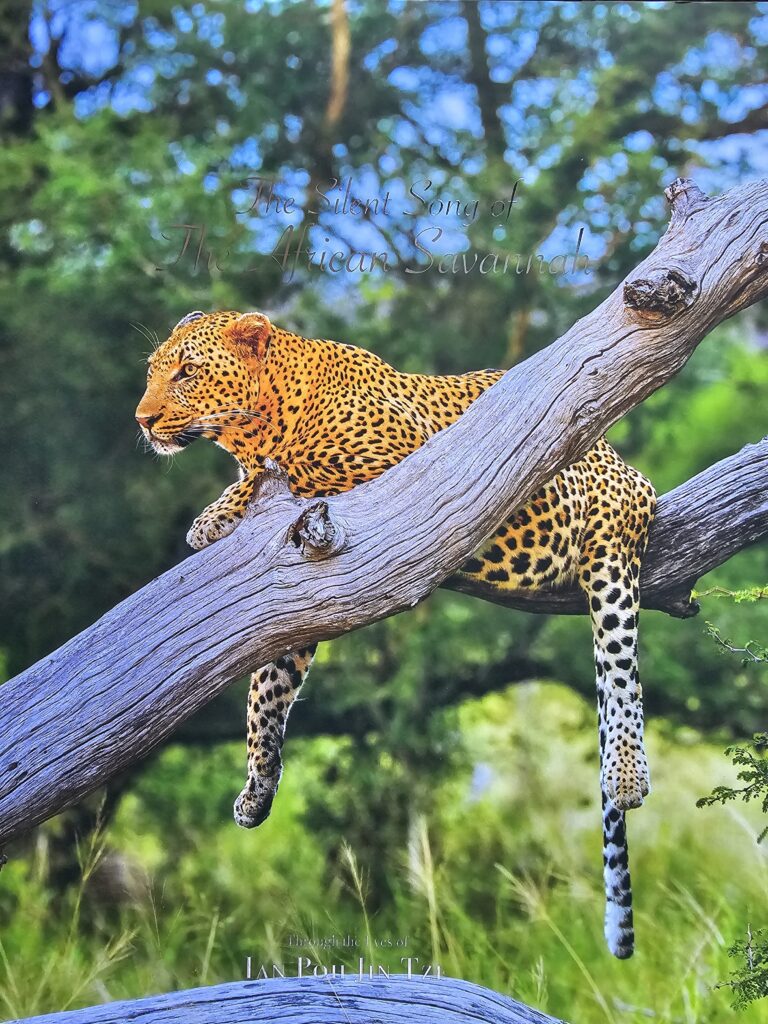
The review copy was very well presented in a windowed, hard slipcase, offering the perception of luxury and inviting readers to explore the contents, attracted by the cover ‘big cat’ image.
Cohesion
The author displays an editing style that favours image inclusion over informing the reader. A number of the included mages are visually quite strong, but lack an accompanying narrative. A more selective image edit, and a stronger connection between photographs and text, would strengthen overall cohesion. The author describes, for instance, the ‘breathtaking velocity’ of a pack of African wild dogs. The accompanying image shows 2 wild dogs, one standing still, and the other, which lies beyond the field of sharp focus, appears to be ambling along. Providing context, even if only through image captions, would increase the appeal of the book to a wider international audience, and strengthen reader engagement.
Verdict/ recommendation
This is a well-presented coffee-table photobook which comes at a relatively high price. A tighter edit of images would enhance storytelling and generally strengthen the offering, as would the inclusion of image captions or a thumbnail index.
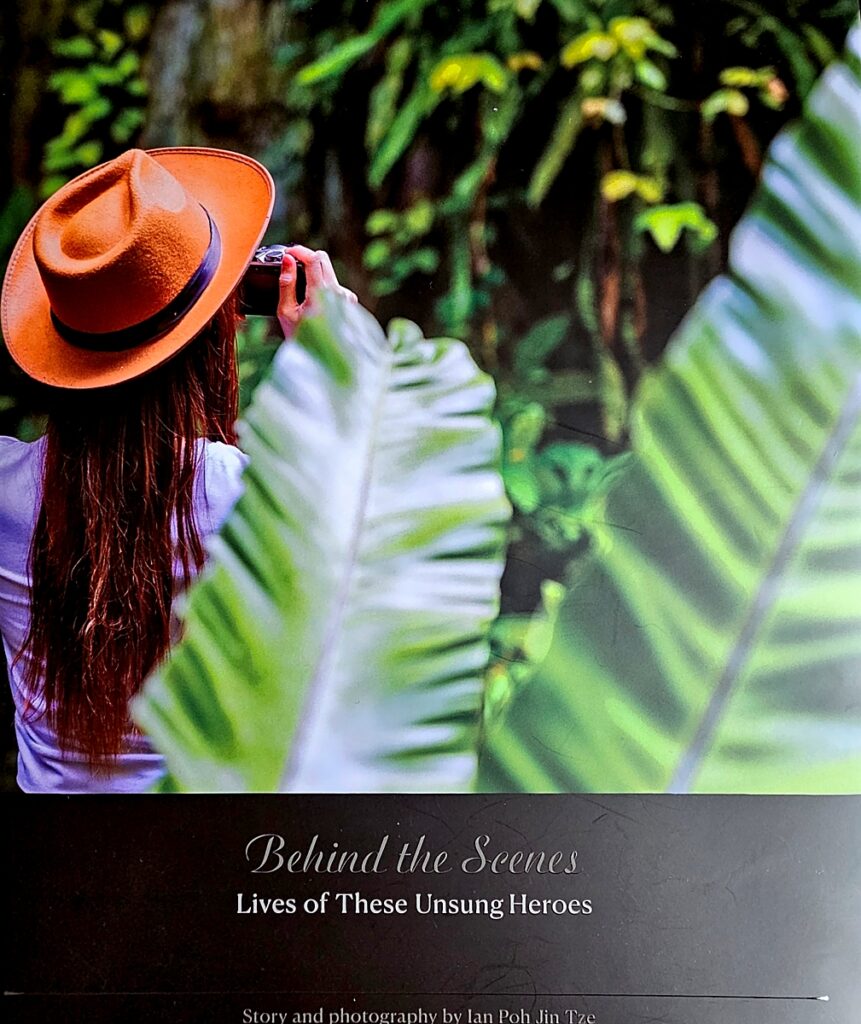
See also our review of Ian Poh Jin Tze’s first book ‘Behind the scenes – Lives of these unsung heroes‘
Disclosure
A complimentary copy of this book was provided to the reviewer for evaluation purposes.
No payment, incentive, or other compensation was offered or received in exchange for this review. The author of the book had no editorial input into the review and did not request prior approval of its content. The opinions expressed are entirely the reviewer’s own.
